
About the Report
Overview
The annual Australia's Environment Report summarises a large amount of observations on the trajectory of our natural resources and ecosystems.
You can find details about the aims and background of Australia's Environment Report in the following short paper:
Latest reports
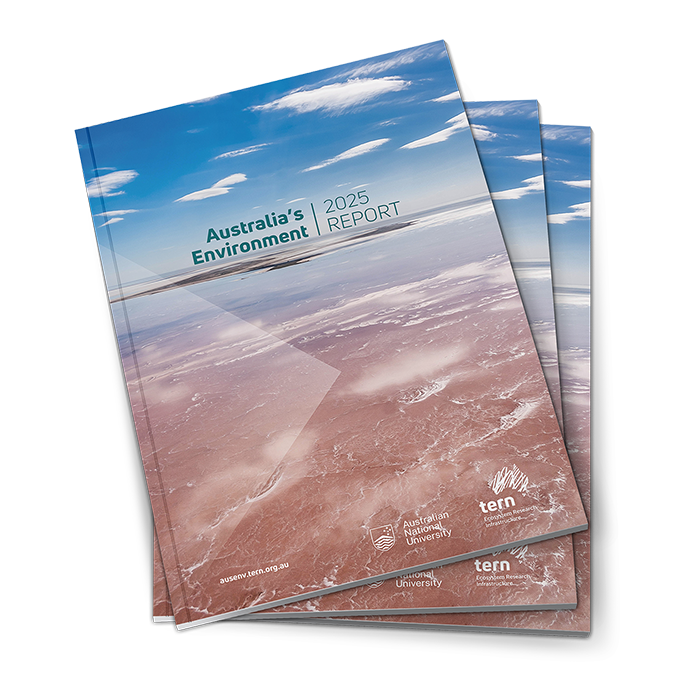
Australia's Environment in 2025
A national snapshot of environmental conditions during 2025, including indicators for vegetation, water, fire, soils and biodiversity across regions.
Download the latest Australia's Environment Report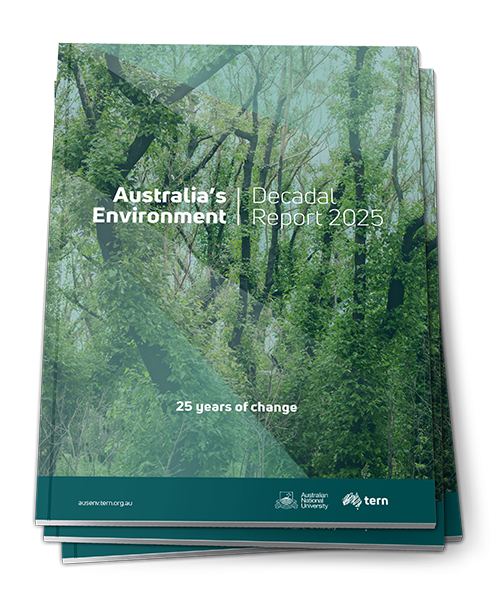
Australia's Environment Decadal Report 2025
This report summarises 25 years of change in Australia's environment based on national indicators. It shows persistent environmental pressures, limited national-scale improvement, and substantial regional variation.
Read more and Download the Decadal ReportPrevious reports
Acknowledgements
Production of this report was made possible by the National Computational Infrastructure (NCI) and data published by Geoscience Australia, Bureau of Meteorology, European Centre for Medium-Range Weather Forecasts, European Commission, NASA, Japan Meteorological Agency, US National Oceanic and Atmospheric Administration, US National Snow and Ice Data Center, Australian Bureau of Statistics, Commonwealth Department of Climate Change, Energy, the Environment and Water, CSIRO, NSW Department of Planning, Industry and Environment, NCRIS-enabled Atlas of Living Australia and Terrestrial Ecosystem Research Network (TERN), Australian Institute of Marine Science (AIMS), and Australian Bureau of Agricultural and Resource Economics.
This report was authored by: