
 Native Forests
Key points
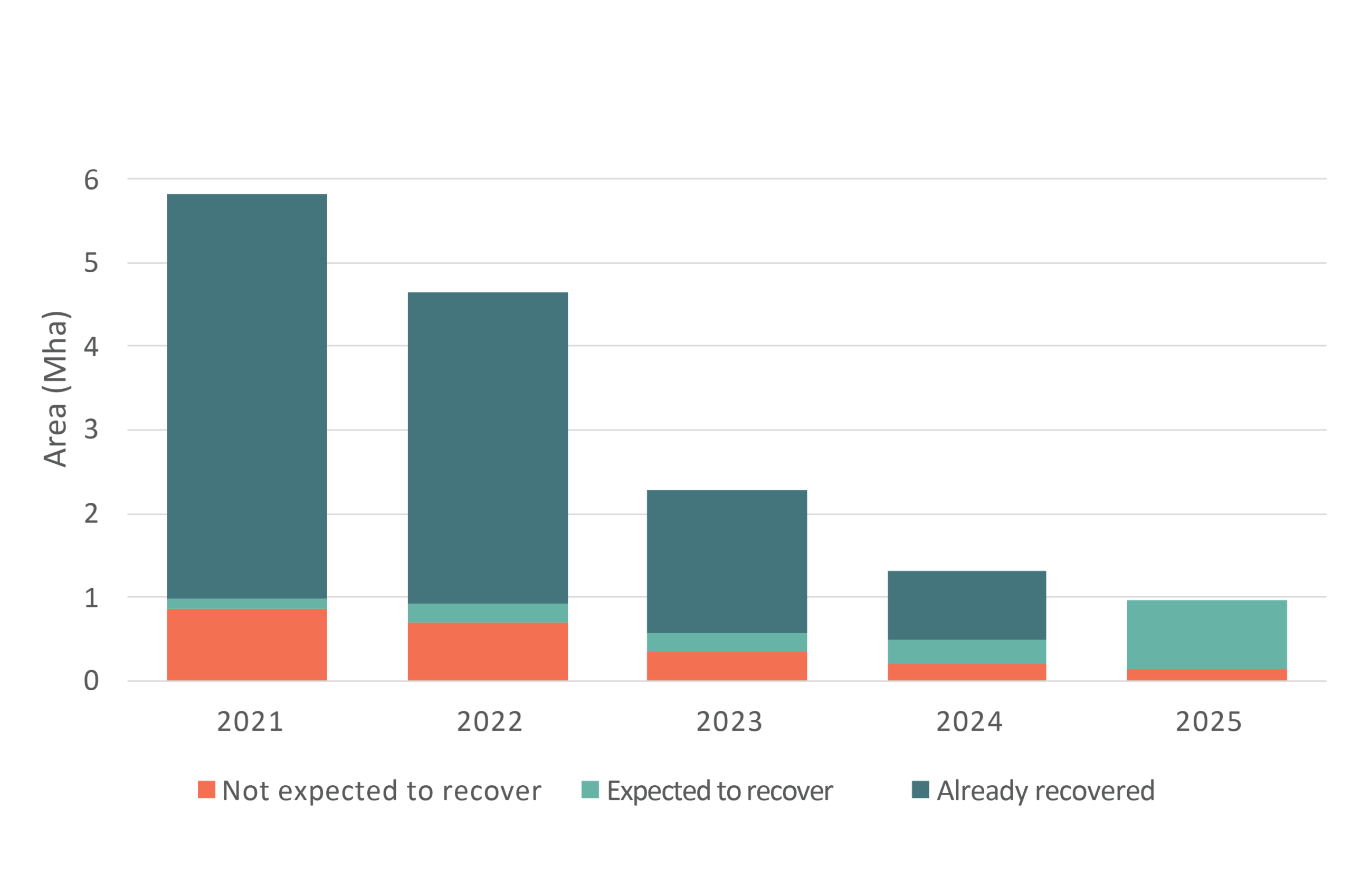
- Native forest loss fell to 0.96 Mha in 2025, the lowest in at least five years. In terms of extent, native forest gains exceeded the losses, but the ecological value of gained and lost forest can be very different.
Loss of native forests is one of the drivers of ecological decline, reducing habitat for wildlife, fragmenting landscapes and releasing stored carbon. Native forest cover fluctuates naturally in response to drought, fire and dieback, and expands during favourable conditions. Superimposed on these natural cycles, land clearing has permanently removed large areas of native forest.
Detailed annual data on native forest loss and gain are available from 2021 onwards, and show a decline in loss over the five years, from 5.8 Mha to 0.96 Mha in 2025, or 0.6% of the 146 Mha native forest area. These figures should be interpreted with caution, as most forest loss is temporary — 85% or more of lost area typically recovers within five years through natural regrowth. The area not expected to recover within five years, a closer proxy for permanent loss, fell from 0.87 Mha in 2021 to 0.14 Mha (0.1%) in 2025. A substantial component of this persistent loss is likely attributable to land clearing. Clearing rates in at least Queensland and NSW have been declining since 2018.
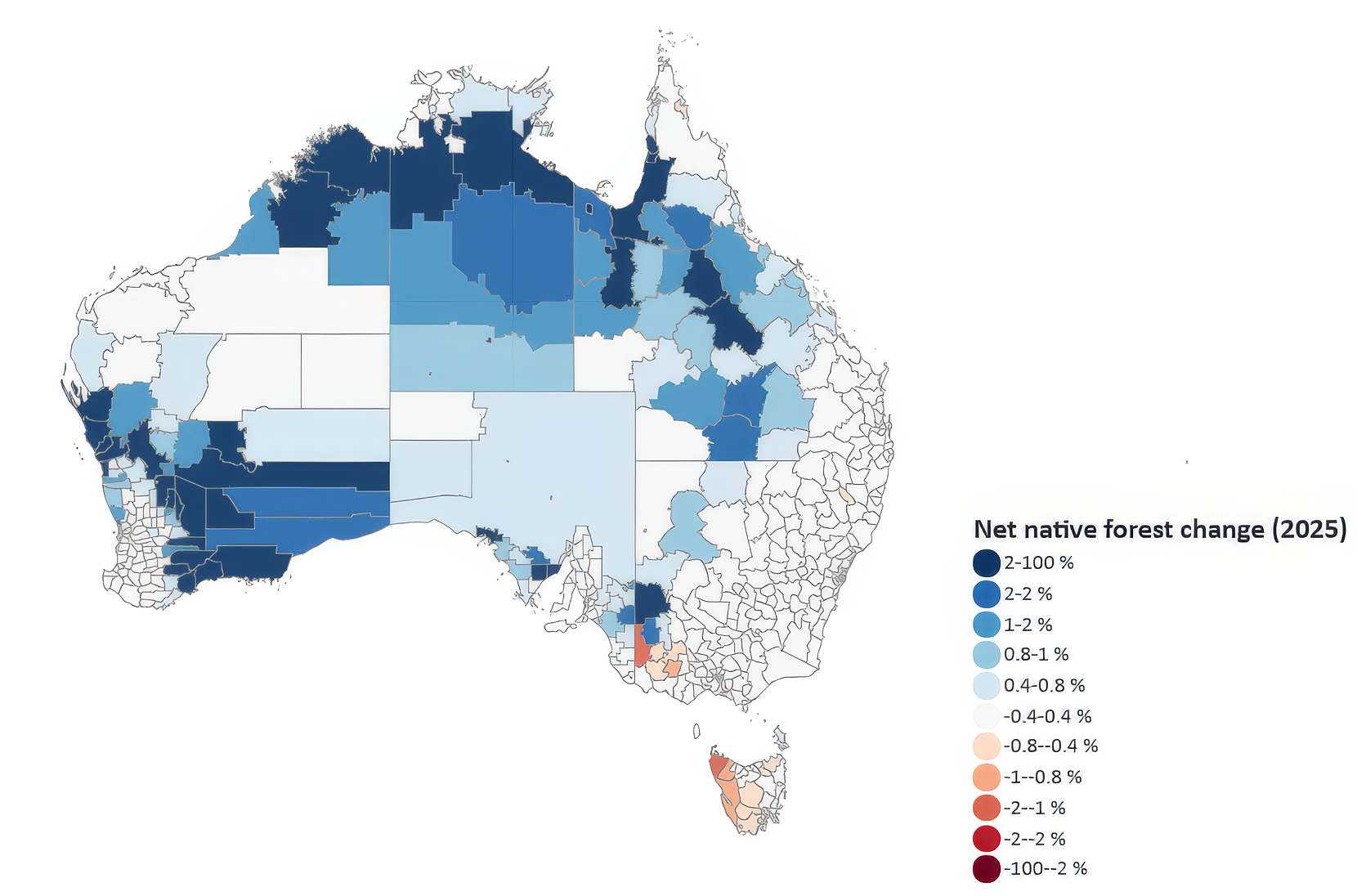
Australia recorded a net gain of 8.2 Mha or 5.6% of native forest in 2025, up from 4.8 Mha in 2024, driven by vegetation thickening in inland Australia. Net gain is a flawed indicator of ecological value, as regrowing forests support less biodiversity than mature or old-growth forests. Where losses include the actual removal of old-growth, high- integrity stands, ecological damage is likely to persist long after the area is notionally recovered.
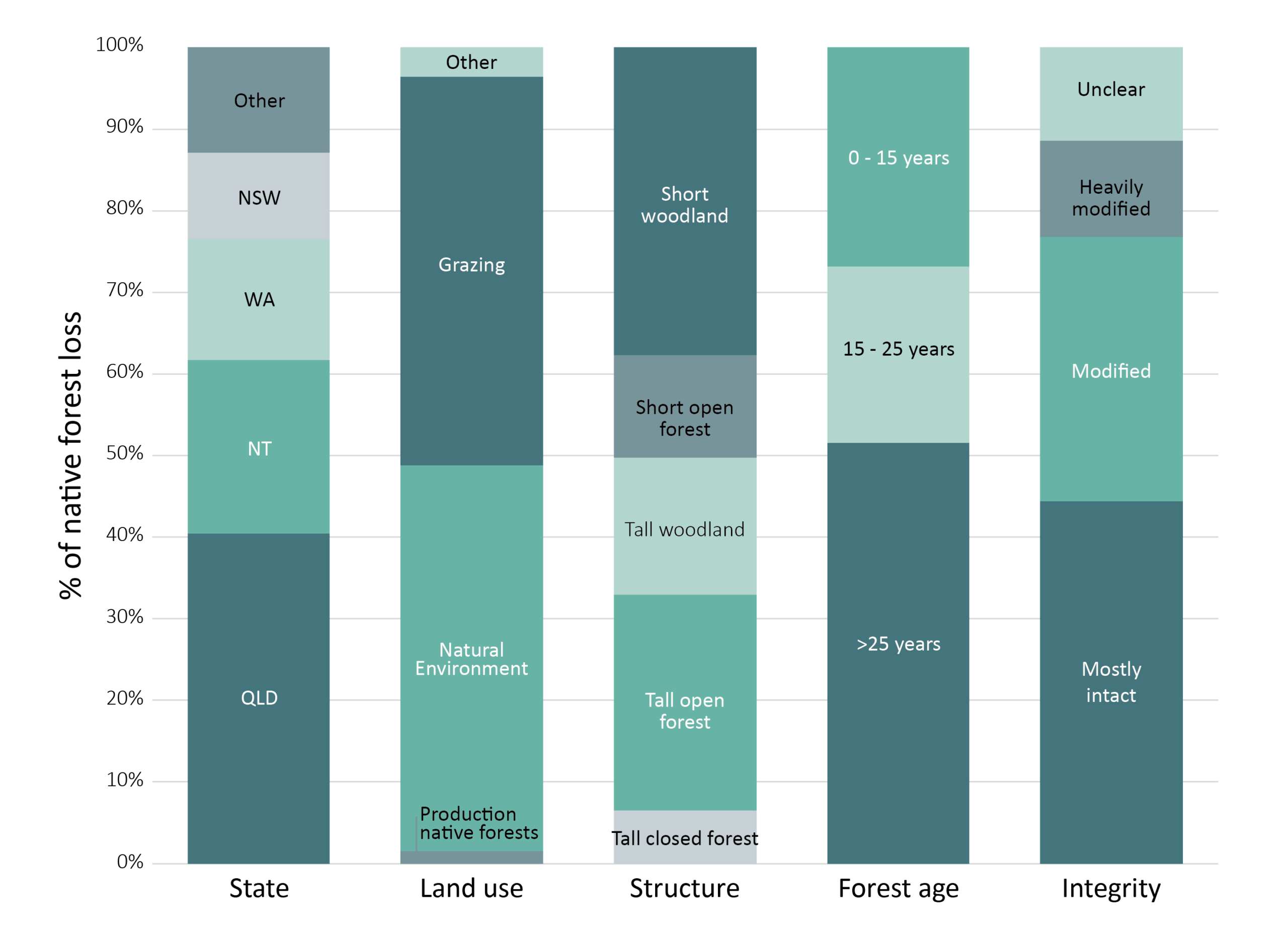
Loss in 2025 was highest in Queensland (39%), the Northern Territory (21%), Western Australia (14%) and New South Wales (11%). Fire was the dominant driver in Victoria and Tasmania, with major losses from the Grampians (135,000 ha) and Little Desert (70,000 ha) fires in Victoria and fires in Tasmania’s west-coast World Heritage Area (95,000 ha). These burnt forests may be expected to recover at least partially in the coming years.
Natural environments and protected areas contributed to most native forest loss (49% of the total lost area) through fire and dieback. Grazing lands contributed to 44% of native forest loss. Native forests logged for wood products represented 1.7% of native forest loss, but these losses are concentrated in tall, older forests.
Most loss occurred in short woodlands and open forests (trees under 5 m), though tall closed forests accounted for 7.2% of the lost area. By age, young regrowth under 15 years comprised 28% of losses, while mature forest over 25 years accounted for 44%. Ecosystem integrity data, measuring how far ecosystems depart from natural conditions, corroborate this: at least 44% of loss occurred in mostly intact native forest and only 14% in already heavily modified stands.
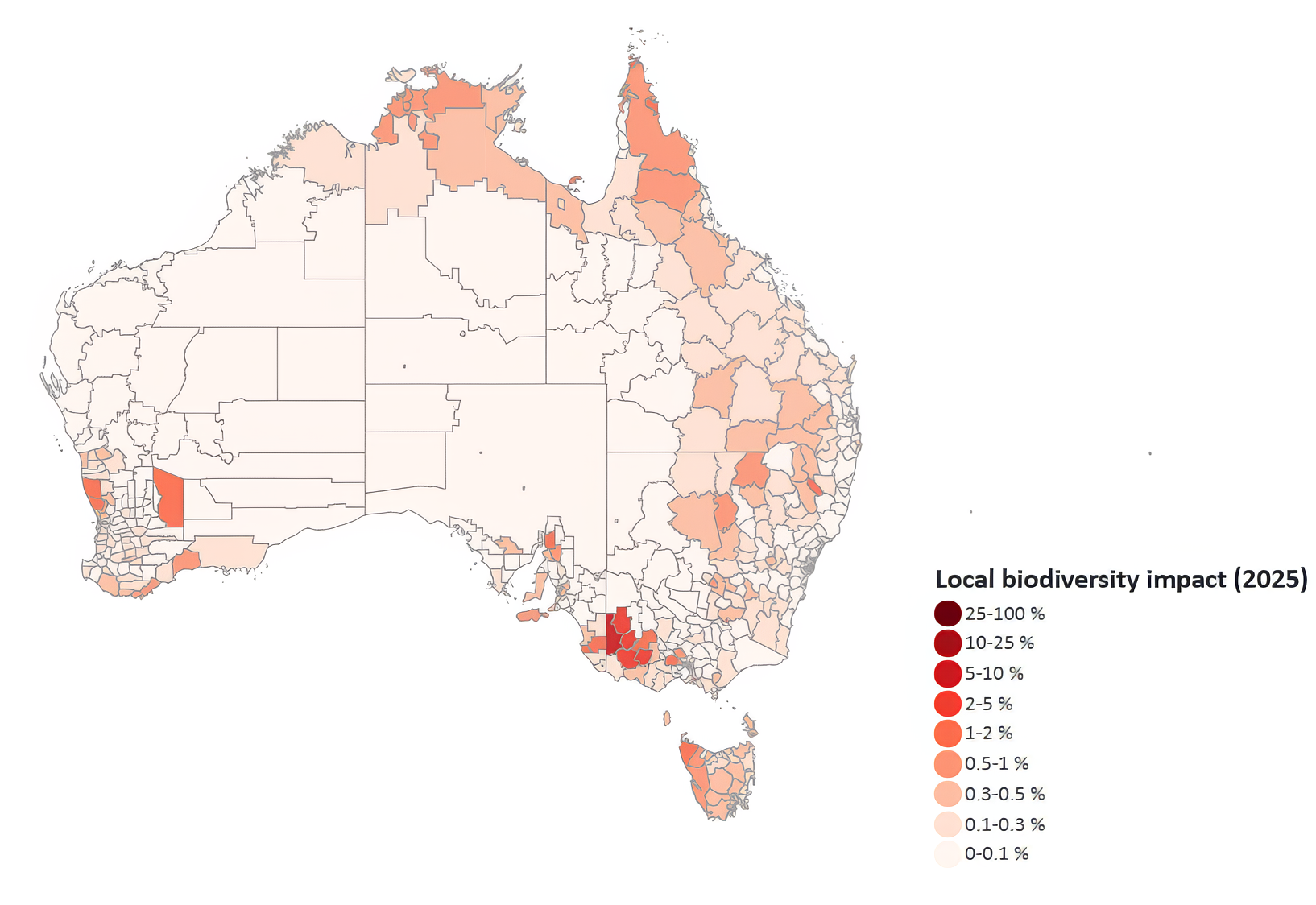
Where high-integrity forests are limited, further loss accelerates fragmentation, intensifies pressure on threatened populations and reduces resilience to future disturbance. The local biodiversity impacts of forest loss in 2025 may be greatest in central-western Victoria, central NSW and south-west WA, where remaining intact forest is scarce and supports locally and nationally threatened species. In western Victoria, fires affected remnant habitat for the Brush-tailed Rock-wallaby and Malleefowl within already-fragmented agricultural landscapes.
Where does this data come from?
Measures of the condition of natural resources and ecosystems were derived from several spatial data sources.
Weather data was derived by combining station satellite and weather forecast model data.
Data on land cover, inundation, fire, soil condition and vegetation leaf area were derived by automated interpretation of satellite imagery. Biodiversity analysis was based on the DCCEEW SPRAT database and Threatened Species Index (TSX), providing measures of change in the relative abundance of Australia's threatened and near-threatened species at national and regional levels.
The other indicators were estimated by combining the weather and satellite data in ANU's environmental data assimilation system, OzWALD.
For further details on data and methods or to download the data, read more.